
- National & D.C. Coalition of Black Gays
- Civil Rights and Home Rule
- ENIK Coffeehouse
- Third World Conference
- Sapphire Sapphos
- The Clubhouse
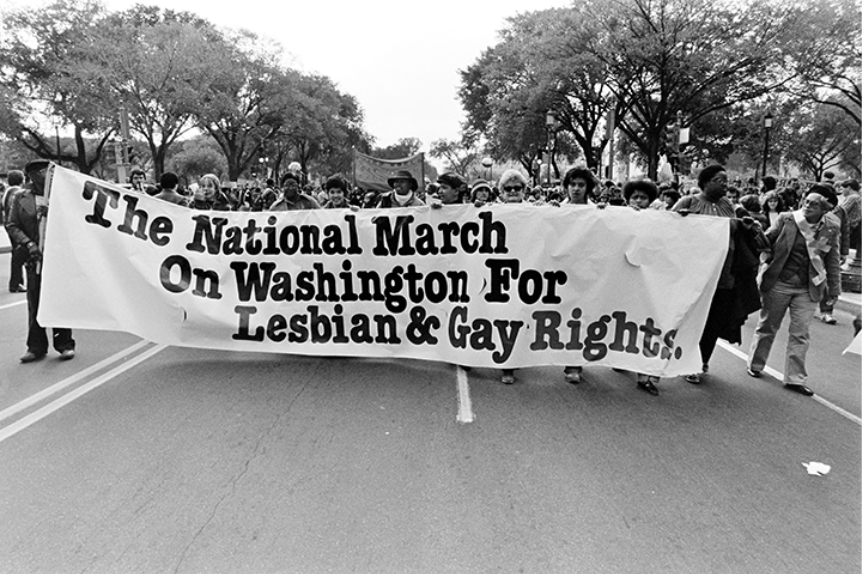
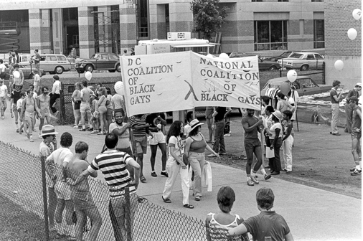
In April 1978, frustrated by the lack of representation and the narrow focus on homophobia by mainstream, primarily white, gay activists, Black gay activists held the first meeting of the D.C. Coalition of Black Gays.
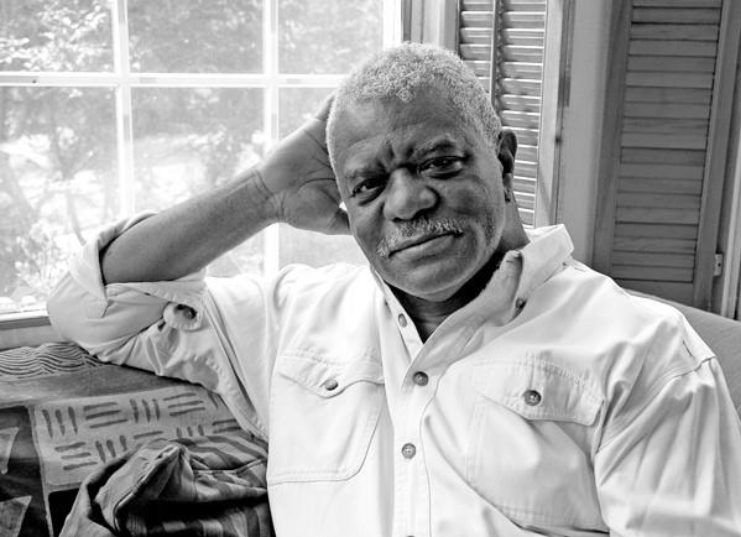
“We simply cannot afford the apathy that currently exists among Black gay women and men”
A. Billy S. Jones, May 1978, The Blade
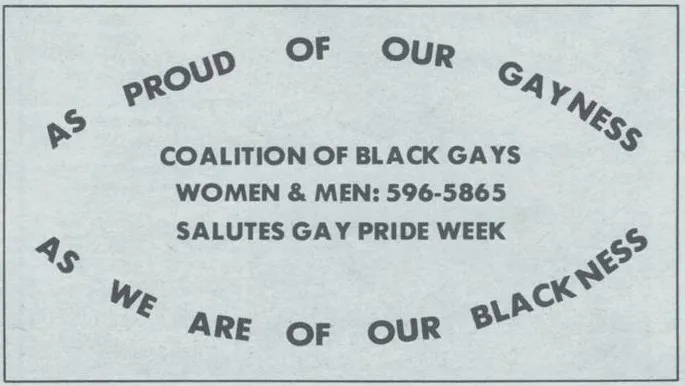
Ad from The Blade celebrating Pride Week, June 1978 focused on the DC Coalition of Black Gays and their work during the June 1978 mayoral election. It highlights how members of the Black LGBTQ+ community organized to make their voices heard in city politics, especially in their outreach to candidates like Marion Barry and their push for recognition in local decision-making.
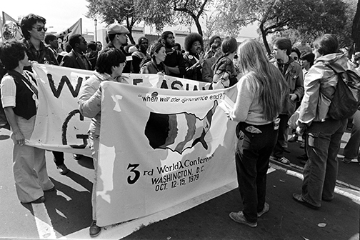
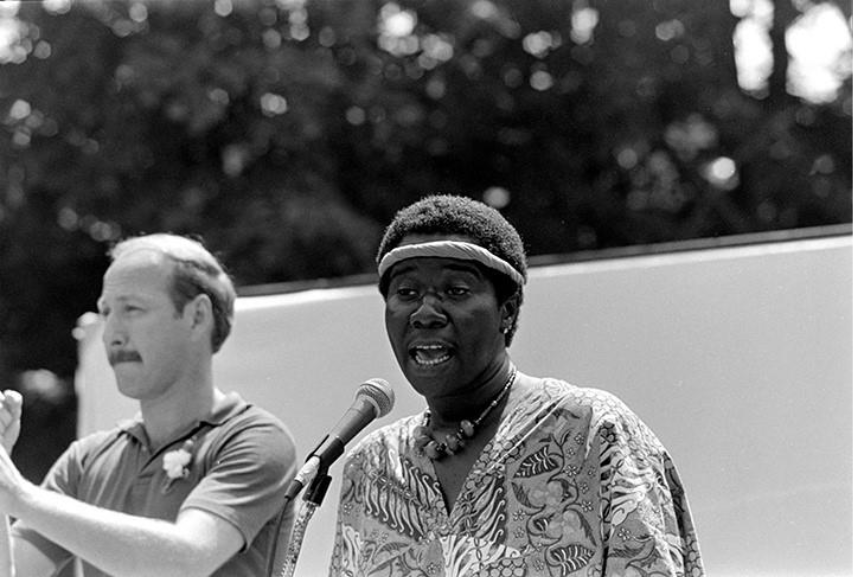
“Being a visible gay woman of color at that point in time, in the early ‘80s, was a political statement.” – Annette “Chi” Hughes
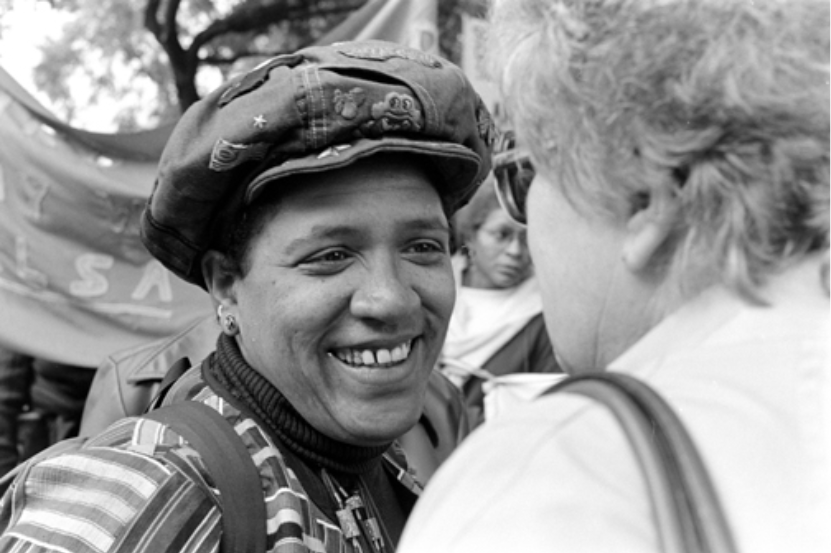
Excerpt from Audre Lorde’s
Keynote Speech at the 3rd World Conference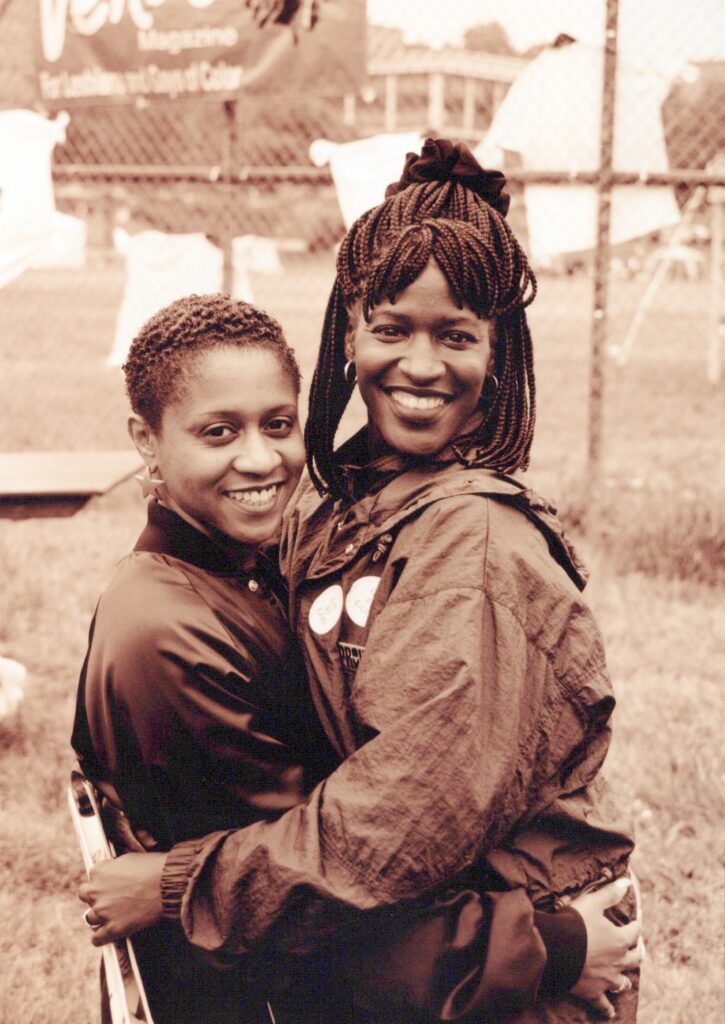

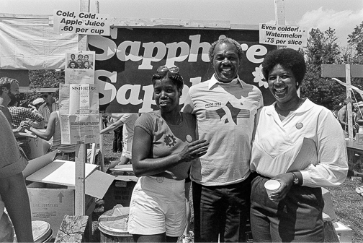
Sapphire Sapphos was founded as a political, social, and cultural group for lesbians of color. Their activities included dances, picnics, regular support group meetings, family-friendly gatherings, and participation in Take Back the Night marches and the annual Pride parade. The organization encouraged women’s voices to be heard at a time when the principal LGBTQIA+ organizations were dominated by men.
The name ENIKAlley refers to its location in the alley between Eighth and Ninth and I and K streets. With an open loft overlooking the main floor, a fireplace and a warm atmosphere, the place was unique among gay and lesbian spaces in DC. The coffeehouse was a crucible for artists, writers, musicians, and performance artists. When Melrose moved to the dc space, many of the performers at the Coffeehouse joined him there. Coffeehouse was taken over by the Sapphire Sapphos in November 1984 and they briefly operated a coffeehouse called Essie’s.
Sapphire Sapphos had its origin in a meeting held by Caryn Williams in late 1979. According to Troi Graves, who served as the group’s president in 1980-81, and again in 1982 and 83, Sapphire Sapphos really took shape in my March of 1980, when officers were selected, a newsletter began publication, and a name was chosen. The name, Graves said, was picked because ‘we wanted first, something that would identify with women of color and, second, we wanted to be up front about being a Lesbian group.’ Sapphire, Graves said, ‘has two connotations, that of a strong, black woman figure, and of a precious gemstone. Sappho, of course, back to the Greek poet.’ Sappho, who lived on the island of Lesbos in the seventh century B.C., was known for her nurturing relationships with other women.
“Of gems and nurturing women.” Excerpt from the Washington Blade, March 16, 1984, vol. 16, no. 12. Rainbow History Project Digital Archives.
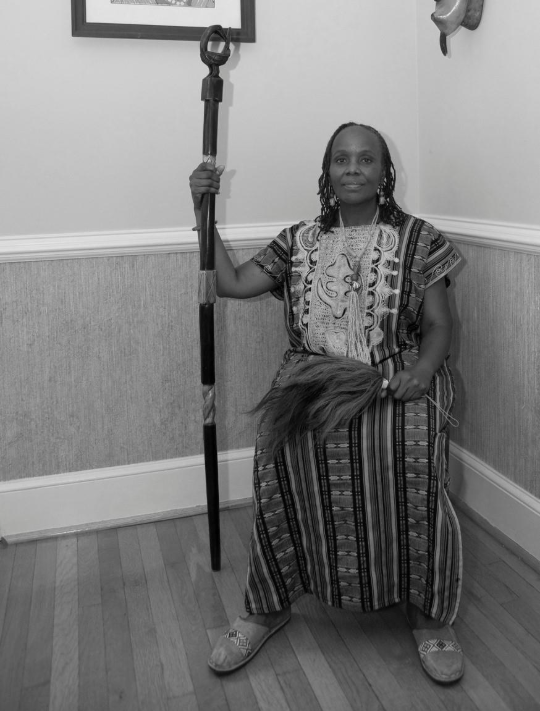
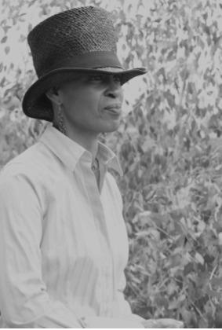
Annette “Chi” Hughes came to D.C. to attend Howard University, after being born in Alabama and growing up in Queens, N.Y. During her time at Howard, she connected with other gay students and helped found the Lambda Student Alliance, the first club for gay students at a Black university in the country. Co-founded Sapphire Sapphos a social and political organization fostering support among lesbian women of color, in 1979.
Learn more about Annette “Chi” Hughes from the Rainbow History Project Digital Collections.
Marion Barry with Sapphire Sapphos Carlene Cheatham and Papaya Mann in 1982. Photo by Leigh Mosley. Rainbow History Digital Archives.

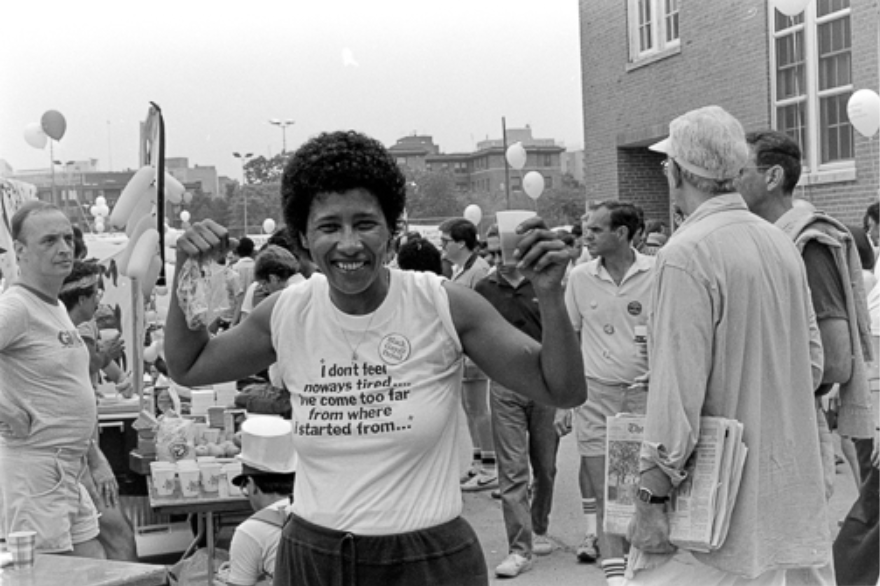
The ClubHouse
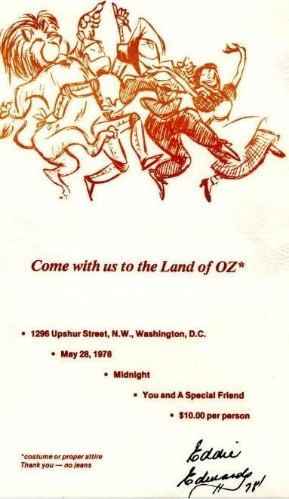
At its height, the ClubHouse hosted legendary entertainers including Sylvester, Jennifer Holliday, and Phyllis Hyman. The crown jewel of its calendar was Children’s Hour, an elaborate Memorial Day weekend party organized by staff and supporters. Beginning in 1976, each year’s themed celebration featured lavish décor, costumes, and DJs, transforming it into a national draw for Black gay men and lesbians.
Epicurean Brothers Social Club Flyer
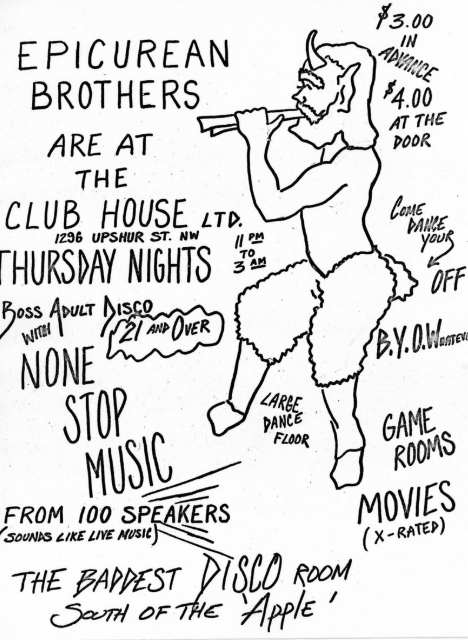
The ClubHouse, which opened in 1975 out of earlier venues like the Zodiac and the Third World, quickly became a centerpiece of Washington, D.C.’s African American LGBTQ social life. With 10,000 square feet, state-of-the-art sound and lighting, and a strict membership system, it offered separate party nights for straight and gay crowds, plus themed evenings, Ladies Night, and Sunday special events.
Epicurean Brothers Social Club Flyer
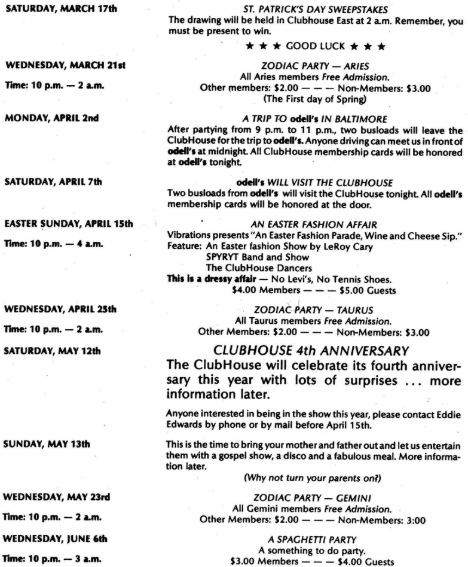
Extravagant holiday celebrations and annual traditions like the Mother’s Day dinner helped cement its reputation as more than a nightclub—it was a hub for community connection. By the 1980s, Memorial Day weekend in D.C. had become a key event on the national LGBTQ calendar.
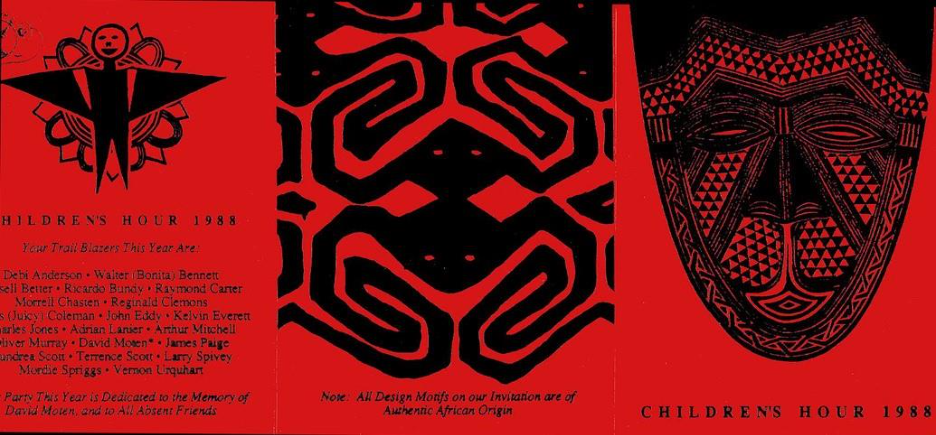
The ClubHouse was also deeply political. It hosted mayoral and council campaign rallies, supported events like the 1979 Third World Conference for people of color in the gay community, and later served as a site for AIDS forums, fundraisers, and educational efforts. Its doors were open to a wide range of community needs, political meetings, gospel nights, cabarets, and cultural celebrations. The club cultivated a reputation for outreach as much as for its nightlife.

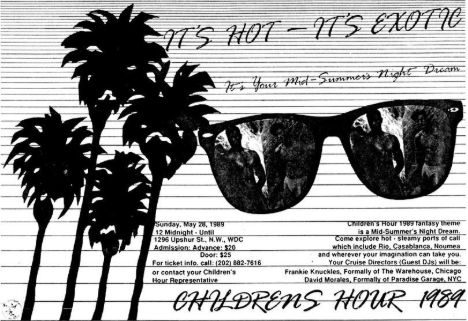
- The ClubHouse Online Exhibit | This exhibit by Rainbow History Project explores the role that The ClubHouse played in the African American gay community of Washington, D.C. Opened in 1975 by Aundrea and Paulette Scott, John Eddy, Chasten Morell, and Rainey Cheeks, The ClubHouse provided the central focus of African-American gay DC social life for 15 years.
- The ClubHouse Collection | Images and other resources related to The ClubHouse, 1975-1990.